
Views: 0 Author: Site Editor Publish Time: 2026-09-03 Origin: Site
Temperature-controlled storage carries incredibly high stakes across modern global supply chains. Product loss, regulatory compliance failures, and soaring energy costs threaten business profitability daily. Relying on generic hardware often leads directly to operational disasters. Selecting a cold room is never a simple, one-size-fits-all purchase. Facility managers must match exact thermodynamic requirements against delicate product sensitivity and demanding daily workflows. Miscalculating these variables triggers severe financial consequences. An undersized system invites catastrophic inventory spoilage during summer peaks. Conversely, over-engineering continuously drains your operational budget through wasted electricity. This article delivers a rigorous technical and commercial evaluation framework. We aim to help facility managers and procurement heads specify the precise system they require. You will discover how to correctly match cooling categories to specific inventory profiles. We also detail how to optimize infrastructure to avoid costly design errors entirely.
Temperature Dictates Infrastructure: Chiller rooms (2°C to 8°C) and freezer rooms (-15°C to -40°C) require fundamentally different insulation thicknesses and compressor capacities.
Product-Specific Compliance: Pharmaceuticals, fresh produce, and frozen meats each have strict, non-negotiable regulatory thresholds for thermal stability.
Design Drives TCO (Total Cost of Ownership): Upfront hardware costs are secondary to long-term energy efficiency; panel insulation and door sealing are critical.
Risk Mitigation: Redundancy in refrigeration units and accurate sizing prevent catastrophic spoilage during peak loads or ambient temperature spikes.
When planning a facility, the primary variable is the internal environment. You must classify spaces based on targeted thermal parameters. Different categories demand distinctly different engineering approaches. Let us examine the three core environments closely.
A standard chiller room operates reliably between 0°C and 8°C. Facilities use these spaces heavily for fresh produce, dairy products, and beverages. They are equally vital for sensitive pharmaceutical goods. Vaccines degrade rapidly outside this narrow thermal window. Technical requirements here go far beyond simple air cooling. You must prioritize precise humidity control constantly. Engineers carefully design these spaces to prevent accidental freezing near the evaporator coils. Frost easily damages delicate plant tissues. It also ruins liquid biological suspensions permanently.
A freezer room handles much harsher environmental conditions. Standard operational baselines range from -15°C to -25°C. Industrial blast freezers push boundaries further, dropping ambient air down to -40°C. You will typically store frozen meats, bulk seafood, and long-term biological samples here. These extreme negative temperatures dictate heavy-duty infrastructure. You need exceptionally thick polyurethane paneling. Builders usually specify 120mm to 150mm insulation depths. Additionally, you must install heated door frames. Doors quickly freeze shut without internal heating cables. Specialized defrost cycles also keep evaporator fins clear of heavy ice accumulation.
An ambient cooling room maintains steady conditions between 15°C and 25°C. Businesses use these zones extensively for food preparation areas, floral storage, and specific dry goods. Pharmaceutical companies utilize them as staging environments before final distribution. The primary technical challenge involves balancing sensible and latent heat loads. You must strip moisture from the air while maintaining a comfortable working environment. Designers often integrate these cooling spaces directly into existing facility HVAC systems. This integration ensures steady airflow and consistent air quality throughout the entire working shift.
Selecting infrastructure means aligning mechanical capabilities against biological and chemical realities. Different commodities react uniquely to thermal stress. You must closely tailor the environment to your inventory.
Perishable foods face constant degradation risks daily. Handling them properly requires nuanced environmental control.
Produce & Floral: Fresh plants need high ambient humidity to prevent rapid wilting. You must space evaporator coils widely across the ceiling. This specific arrangement ensures gentle, low-velocity airflow. Aggressive fan speeds dry out delicate leaves very quickly. Cross-contamination of ethylene gas also requires specialized ventilation strategies.
Meat & Poultry: Raw animal proteins present severe biological hazards. A facility needs rapid temperature pull-down capabilities. Fast chilling complies directly with strict food safety standards, including HACCP protocols. Slow cooling allows dangerous bacterial colonies to multiply exponentially inside the meat.
Medical logistics tolerate absolutely zero margin for error. Companies face non-negotiable adherence to Good Distribution Practice (GDP) guidelines. Strict FDA compliance requires rigorous validation protocols. Medical storage demands fully redundant refrigeration systems. If one compressor fails unexpectedly, a backup must engage instantly. You also need uniform temperature mapping across all shelving racks. Sensors must provide continuous data logging. Modern facilities integrate these sensors into fail-safe alarm networks. These alarms notify personnel immediately if conditions drift near unacceptable thresholds.
Chemical stability relies entirely on strict environmental parameters. Storing volatile, temperature-sensitive compounds introduces major safety concerns. You must evaluate the flash points of stored chemicals carefully. Facilities handling flammable materials require explosion-proof refrigeration components. Engineers specify ATEX-certified compressors and completely sealed electrical panels. These upgrades prevent random sparks from igniting trapped chemical vapors. Safety always dictates the final engineering choices in hazardous environments.
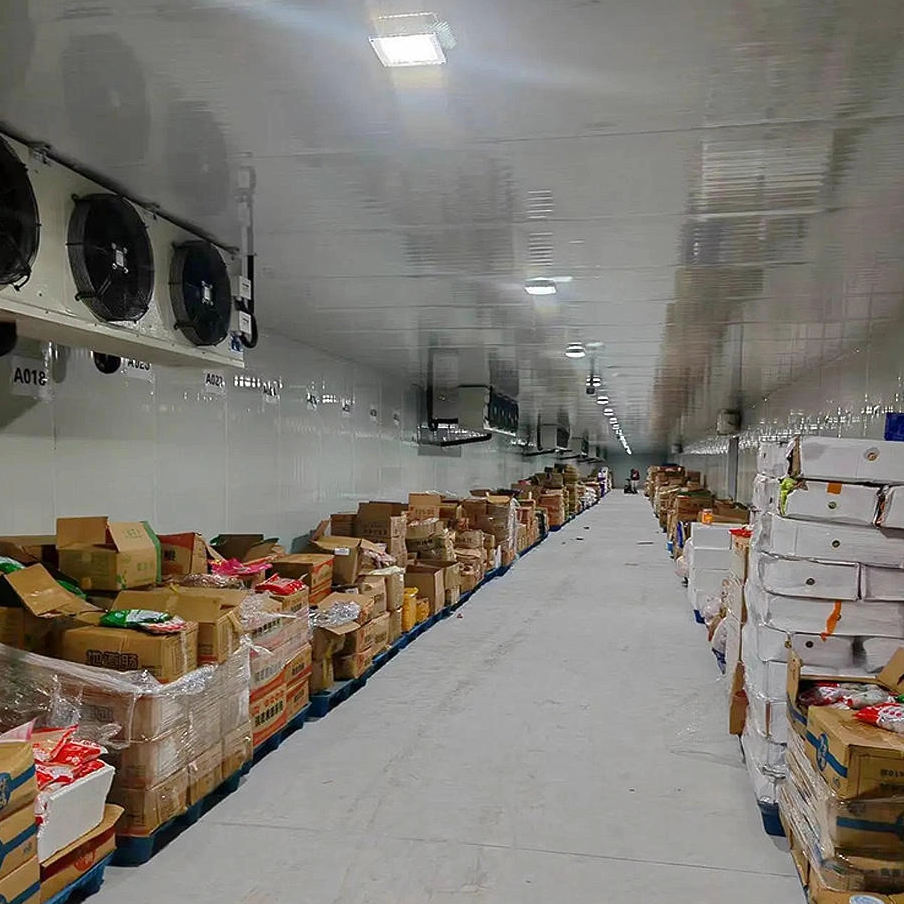
Proper cold room design relies on accurate mathematics and premium building materials. Every structural choice directly impacts overall thermal performance.
The walls form your primary defense against external thermal transfer. You must choose between Polyurethane (PU) and Polyisocyanurate (PIR) core materials. Evaluate their thermal conductivity, commonly known as the R-value. High R-values mean superior resistance to heat flow. Additionally, review their fire resistance ratings closely. PIR generally offers much better fire retardant properties than standard PU. Proper assembly prevents insidious thermal bridging. Heat exploits tiny gaps between poorly joined surfaces. You mitigate this risk by utilizing interlocking cam-lock panels. These hidden locking mechanisms pull joints tightly together. They create an unbroken, highly efficient thermal seal.
System architecture defines how cooling equipment integrates into your specific building footprint.
Monoblock Systems: These are compact all-in-one units. Evaporators and condensers sit inside a single metal chassis. They work incredibly well for small spaces. However, they dump extracted heat directly into the surrounding room.
Split Systems: These units separate the indoor evaporator from the outdoor condenser. They suit larger logistical operations perfectly. Assess your space constraints, noise tolerance, and indoor ventilation capacity when choosing between integrated or remote units.
You cannot simply guess the required compressor size. Engineers determine precise cooling capacity through rigorous load calculations. They factor in ambient environmental temperatures during peak summer months. They also count the expected frequency of daily door openings. Product ingress temperature matters heavily during this math. Hot products force the entire system to work much harder. Finally, designers add internal heat loads into the equation. Bright LED lighting, human personnel, and electric forklifts all generate continuous heat inside the sealed space.
Environmental regulations rapidly shift the global cooling landscape. Evaluate the Global Warming Potential (GWP) of your chosen refrigerants carefully. Selecting low-GWP gases ensures long-term regulatory compliance. It also prevents premature equipment obsolescence. Energy consumption dominates operational budgets over time. Look for Variable Frequency Drive (VFD) compressors. They adjust their running speed dynamically based on current thermal demand. Pair them alongside Electronically Commutated (EC) fans. EC motors reduce baseline energy consumption significantly compared to traditional AC motors.
Excellent hardware fails completely without proper operational management. Small oversights during daily use destroy theoretical efficiency gains instantly.
Doors represent the largest vulnerability in any thermal envelope. You must match the door style precisely to your traffic volume. Choose insulated hinged doors for low-traffic pedestrian access. Select heavy-duty sliding doors for continuous forklift access. Sliding mechanisms open faster and clear wide pathways safely. You must control air exchange strictly during loading and unloading. Warm moist air rushes in whenever doors open. Install heavy PVC strip curtains across the doorway. Alternatively, deploy high-velocity air curtains. These specialized solutions minimize temperature fluctuations and protect delicate interior conditions.
Floor engineering requires careful attention, especially in negative temperature zones. Deep frost penetrates exposed concrete slabs over time. This trapped moisture eventually freezes and expands outward. The resulting pressure heaves the concrete upward violently. This movement destroys the floor structure completely. Prevent floor heaving by specifying under-floor heating mats. You must also install appropriate vapor barriers directly below the insulation layer. These barriers block ground moisture from entering the thermal envelope entirely.
Mechanical systems require highly disciplined upkeep. Implement strict protocols for routine coil cleaning. Dirty evaporator fins severely choke airflow. They reduce cooling capacity rapidly. Schedule weekly door seal inspections. Damaged rubber gaskets leak expensive refrigerated air constantly into hallways. Finally, monitor your scheduled defrost cycles very closely. Improperly timed defrosting causes massive ice buildup on cooling fins. This thick ice acts as an insulator. It blocks essential heat transfer and strains the compressor heavily.
Table: Optimal Storage Temperature Parameters
Facility Type | Target Range | Primary Application | Critical Design Feature |
|---|---|---|---|
Ambient Cooling | 15°C to 25°C | Dry goods, floral, staging | HVAC integration |
Chiller Room | 0°C to 8°C | Produce, dairy, vaccines | Precise humidity control |
Freezer Room | -15°C to -25°C | Frozen meats, seafood | 150mm panels, heated doors |
Blast Freezer | -25°C to -40°C | Rapid biological freezing | High-velocity evaporators |
Procuring thermal infrastructure is a major strategic investment for any business. You must evaluate suppliers based on long-term performance rather than just looking at the initial sticker price.
Focus heavily on long-term operational expenditure. The cheapest hardware often consumes the most electricity daily. You should calculate the projected electricity usage over a standard ten-year lifespan. Highly efficient compressors cost more upfront but generate massive utility savings later. Always weigh long-term energy consumption heavily during your rigorous vendor review process.
A reliable supplier provides much more than just metal hardware. Verify they offer localized temperature mapping services post-installation. They must prove their equipment maintains consistent conditions across every single shelf. Ask for valid ISO certifications validating their manufacturing processes. Furthermore, demand load calculation transparency. The vendor should readily explain exactly how they sized your specific equipment.
Equipment breaks down at the most inconvenient times imaginable. You need absolutely ironclad support. Prioritize vendors offering responsive 24/7 technical support hotlines. Confirm their local rapid parts availability before signing anything. If a compressor fails, you cannot wait weeks for international shipping. Scrutinize their robust warranty terms carefully. Ensure the warranty covers both mechanical compressors and structural panel integrity comprehensively.
Do not rush the final purchasing contract. Request detailed thermodynamic modeling from potential partners before committing. Have them present a clear blueprint of your intended storage temperature zones. Review these engineering models alongside your daily workflow plans. This collaborative review ensures a perfect operational fit for your team.
Choosing the correct cold storage infrastructure requires balancing complex thermal physics, strict product requirements, and realistic business economics. Facility managers must prioritize precise engineering over generic cooling solutions. Minor design upgrades quickly pay for themselves over time. Thicker insulation panels and premium automated doors drive continuous energy savings. They also drastically reduce catastrophic spoilage risks.
Take the following action steps to advance your upcoming project:
Conduct a comprehensive audit covering your specific inventory requirements and daily compliance mandates.
Document ambient site conditions, daily door opening frequencies, and internal heat loads highly accurately.
Schedule a technical consultation to request a custom load calculation for your specific facility footprint.
A: Terminology differs mainly by physical scale and customization. Walk-in coolers are typically smaller, standardized commercial units found in restaurants or retail shops. Cold rooms are custom-built, industrial-scale facilities designed for heavy logistics. They integrate specialized structural panels and high-capacity refrigeration systems to handle massive warehouse inventories.
A: Insulation thickness correlates directly against target temperatures. For positive temperature chillers, standard baselines range from 75mm to 100mm. For deep freezers operating below -15°C, engineers mandate 120mm to 150mm panels. Blast freezers often require even thicker custom panels to block aggressive thermal transfer completely.
A: Yes. Designers achieve this easily through modular partitioning and dual-temp configurations. They divide a larger footprint using internal insulated walls. Each partitioned zone utilizes independent evaporators and thermostats. However, you must carefully manage traffic flow between zones. Poor traffic management causes unwanted moisture migration and cross-contamination.
A: Ice accumulation usually stems directly from warm humidity ingress. Faulty rubber door seals or excessive door openings allow moisture inside. The moisture then freezes directly onto the cold evaporator coils. Prevent this by installing high-velocity air curtains. Replace worn door gaskets immediately. Program properly timed automatic defrost settings consistently.


