
Views: 0 Author: Site Editor Publish Time: 2026-10-04 Origin: Site
Specifying a commercial refrigeration system based solely on peak cooling capacity is a recipe for inflated energy bills. It inevitably leads to premature mechanical failure. Facility managers often realize too late how crucial the initial selection truly is. The choice between different compressor designs fundamentally dictates a facility’s capital expenditure, operating costs, and long-term maintenance roadmap. Choosing poorly causes massive efficiency losses across your entire plant. Selecting wisely ensures stable temperatures and remarkably low operational overhead. This article serves as a technical and financial decision guide. We will help you match your compressor architecture with specific cold storage duty cycles. You will learn how to properly evaluate part-load requirements. We also cover how to align equipment choices with realistic operational budgets. By understanding the distinct strengths of each technology, you can optimize your cooling infrastructure. Readers will discover actionable strategies for preventing expensive downtime and securing optimal system performance.
Scroll Compressors: Best for steady, low-to-medium capacity loads where low upfront cost, quiet operation, and minimal footprint are prioritized.
Piston Compressors: The standard for environments with highly variable loads, offering excellent field serviceability and adaptability across a wide range of operating temperatures.
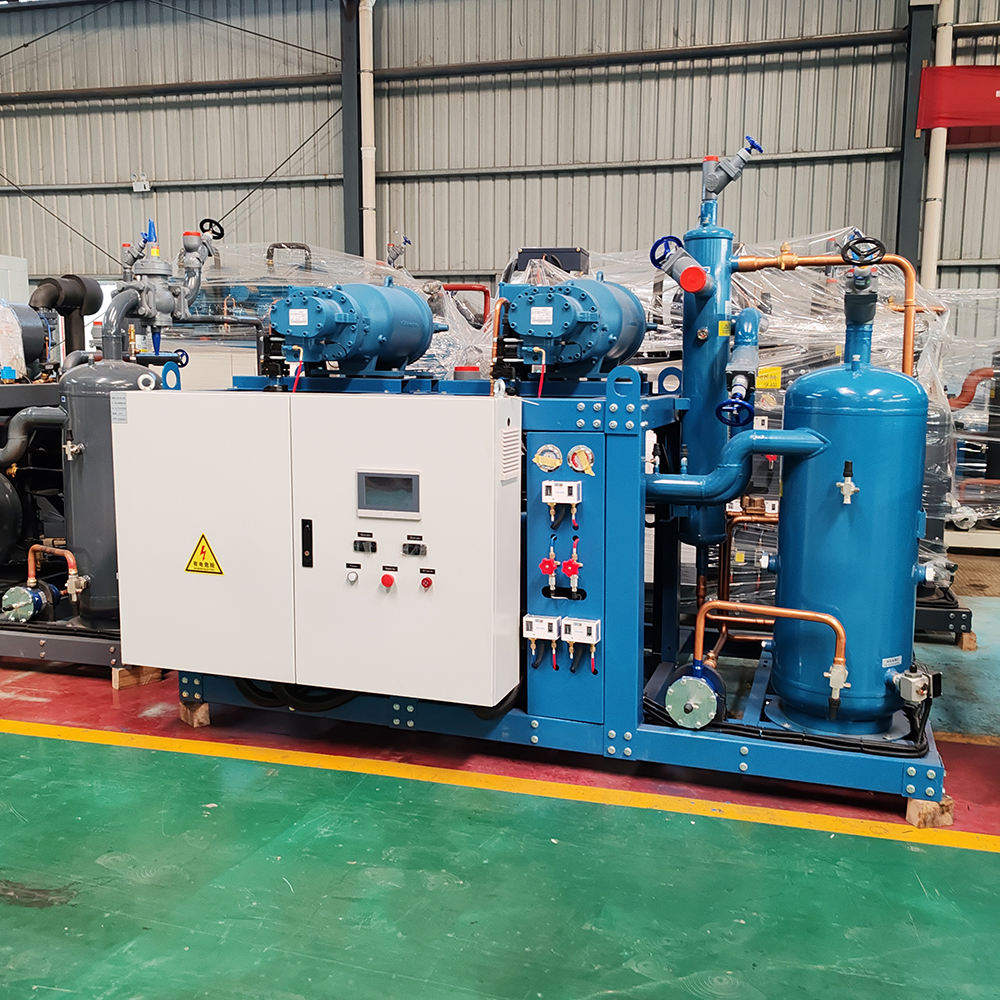
Screw Compressor Units: The industrial workhorse for continuous, heavy-duty cooling; requires higher CAPEX but delivers superior longevity and part-load efficiency in high-tonnage applications.
Mismatched equipment destroys operational budgets rapidly. Many facility owners over-specify their refrigeration systems during the initial design phase. They falsely assume a larger machine is always better. Using a massive unit for a small, intermittent cooling load causes severe short-cycling. Short-cycling forces the electric motor to start and stop continuously. This erratic operation accelerates mechanical wear on contactors and bearings. It also spikes electricity demand charges unnecessarily, draining your monthly budget.
Conversely, under-specifying your equipment is equally dangerous. Relying on light-duty units for heavy industrial applications guarantees disaster. Using baseline commercial gear for intensive blast freezing often leads to catastrophic motor burnout. The internal components overheat when pushed beyond their design limits. You lose valuable product inventory when temperatures rise unexpectedly. Mismatched architectures force you into a cycle of constant emergency repairs.
You need clear success criteria for evaluating new equipment. We recommend focusing on three specific operational goals:
Maximizing the Coefficient of Performance (COP) at your most typical daily operating conditions, rather than just extreme summer peaks.
Ensuring localized part availability so you do not wait weeks for critical replacement components.
Aligning preventative maintenance schedules with your facility’s actual downtime tolerances.
Implementation realities often constrain your ideal technical choices. Your selected technology must integrate smoothly with existing plant infrastructure. Consider your Building Management System (BMS) capabilities carefully before purchasing. Evaluate whether your facility supports advanced electrical integrations safely. These control mechanisms directly impact your final system performance and overall reliability.
These modern units utilize a continuous orbital motion to compress refrigerant gas. One scroll remains entirely stationary inside the steel casing. The second scroll orbits continuously inside the stationary one. This elegant design features virtually no volumetric clearance at the discharge port. The lack of internal clearance leads to exceptionally high volumetric efficiency. They waste very little energy during the standard compression cycle.
They are ideal for specific, highly stable cold storage applications. We highly recommend them for standard commercial walk-in coolers. They perform exceptionally well in everyday retail refrigeration environments. They also excel in modular cold rooms deployed across food service operations. These specific applications typically require under 20 to 30 horsepower overall.
When evaluating this technology, you must consider several crucial operational factors. Operators benefit heavily from extremely low vibration levels during daily use. They have significantly fewer moving parts than traditional alternative designs. They remain highly reliable under steady, predictable environmental conditions. They also require a much lower initial capital expenditure, preserving cash flow.
However, you must acknowledge the inherent risks before buying. These units are generally hermetic or semi-hermetic in physical construction. When they eventually fail, technicians replace them entirely on site. They are rarely rebuilt in the field due to their sealed nature. Furthermore, they offer limited scaling capacity for massive industrial spaces. When designing modular setups, integrating a robust scroll compressor ensures quiet and efficient daily operation.
This older but highly refined technology relies on a traditional reciprocating action. Pistons draw in refrigerant gas forcefully on the downward stroke. They compress it powerfully within a cylinder on the upward stroke. This architecture boasts exceptional historical reliability across decades of use. Almost every commercial HVAC-R technician possesses deep familiarity with this specific design.
They shine brightest in highly demanding cold storage applications globally. Food processing facilities rely on them heavily for daily production. Mid-sized distribution centers utilize them to handle widely fluctuating daily shipments. They perform brilliantly in environments experiencing extreme internal temperature variations. Blast freezers remain a perfect use-case for this highly robust technology.
You must weigh specific evaluation factors before authorizing procurement. Technicians can fully rebuild internal valves, pistons, and rings directly on-site. They do not need to remove the heavy unit from the piping network. This field serviceability minimizes facility downtime dramatically during emergency breakdown events. Furthermore, they handle widely fluctuating cooling load demands with remarkable efficiency.
Despite these massive advantages, there are notable mechanical drawbacks. They produce significantly higher vibration levels during standard daily operation. More internal moving parts make them vulnerable to gradual mechanical wear. They require strict, highly proactive preventative maintenance schedules. Skipping basic oil changes leads to rapid efficiency degradation over time. A well-maintained piston compressor delivers unmatched adaptability across diverse operating temperatures.
These massive industrial systems utilize a sophisticated rotary twin-screw design. Two interlocking helical rotors compress the refrigerant gas continuously and smoothly. They handle massive volumes of gas effortlessly without internal pulsing. They experience minimal internal mechanical wear over greatly extended operational periods. This continuous sweeping motion eliminates the vibration issues found in reciprocating designs.
They dominate heavy industrial cooling applications worldwide. Large-scale refrigerated warehousing facilities depend entirely on their sheer cooling power. Massive food processing plants use them for continuous, uninterrupted industrial freezing. They typically range from 50 horsepower to well over 1000 horsepower. They serve as the undisputed backbone of centralized refrigeration plants.
The operational benefits achieved are truly substantial for large facilities. They deliver exceptional mechanical longevity under punishing daily loads. They often run for 40,000 or more hours between major factory overhauls. They offer infinite cooling capacity control, typically scaling smoothly from 10% to 100%. Utilizing internal slide valves yields massive operating expense savings year over year.
However, the financial and technical barriers to entry remain high. They demand a very significant initial capital investment upfront. They require complex, carefully monitored oil management systems to function properly. They represent wildly inefficient overkill for low-capacity or highly intermittent cooling loads. Investing in a high-tonnage screw compressor unit is the definitive choice for maximizing longevity in centralized plants. For specialized high-stage applications, configuring an advanced screw compressor unit delivers unparalleled industrial stability.
Selecting the right mechanical system requires balancing physical, operational, and logistical constraints. You cannot evaluate cooling equipment in a vacuum. Let us examine how these three distinct architectures compare across critical dimensions.
First, evaluate the physical footprint-to-cooling-ratio required for installation. You need a practical conceptual framework to guide space planning. Use orbital designs for small, tight mechanical spaces where footprints matter. Rely on reciprocating units for medium-sized, easily accessible rooftop or plant rooms. Reserve twin-rotor industrial machines for large, dedicated centralized refrigeration plants.
Energy efficiency varies wildly between part-load and full-load states. Cold storage environments rarely run at 100% capacity continuously. Nighttime operations and mild winter months reduce heat loads significantly. Heavy industrial units handle part-load efficiencies brilliantly using mechanical slide valves. Reciprocating units also step down smoothly through manual or automatic cylinder unloading. Smaller orbital units often rely on basic on/off cycling methods. This frequent cycling wastes electrical energy during partial load scenarios.
Finally, evaluate your local support ecosystem thoroughly before purchasing. This remains a highly critical, yet often ignored, decision factor. Does your local HVAC-R maintenance team have the specialized expertise required? Rebuilding a piston block requires specific, hands-on mechanical skills. Servicing a complex industrial oil separator demands specialized factory training. Always match your machinery to your local labor pool capabilities.
Compressor Architecture Comparison
Feature / Technology | Orbital (Scroll) | Reciprocating (Piston) | Rotary Twin-Screw |
|---|---|---|---|
Ideal Application | Walk-in coolers, retail displays | Blast freezers, variable loads | Massive cold storage facilities |
Capacity Range | Low to Medium (Under 30 HP) | Medium to High | Very High (50 HP - 1000+ HP) |
Operational Vibration | Very Low | High (Requires isolation) | Low to Moderate |
Field Serviceability | Replace only (Hermetic) | Fully rebuildable on-site | Requires specialist technicians |
Part-Load Efficiency | Fair (Relies on cycling) | Good (Cylinder unloading) | Excellent (Slide valves/VFDs) |
Moving from technical evaluation to final procurement requires a rigorous financial framework. You must weigh upfront capital costs against a 10-to-15-year operational lifespan accurately. Cheaper equipment often consumes drastically more electricity over a single decade. Calculate your projected annual energy consumption meticulously using historical weather data. Balance this energy projection against the initial purchase price to find true value. Relying solely on the lowest installation bid guarantees long-term financial regret.
Rigorous vendor vetting is equally crucial for long-term operational success. You must ask suppliers highly specific technical questions before signing contracts. Ask them, "What are the exact maintenance intervals for this specific model?" Also inquire, "Is this specific unit fully compatible with natural refrigerants like Ammonia?" Future-proofing your system against changing environmental regulations is absolutely mandatory. Requesting detailed, transparent answers prevents costly surprises during commissioning.
We strongly encourage a specific, highly actionable next step. Audit your current facility's peak versus minimum cooling load profile today. Gather accurate, minute-by-minute data from your existing control systems. Complete this vital audit before requesting any formal equipment quotes. Accurate load profiles guarantee precise equipment matching. Discussing your findings with experts who provide comprehensive services ensures your final design aligns flawlessly with your facility's daily realities.
Refrigeration engineering requires exacting precision and honest operational assessments. No single mechanical design is universally "best" for every cold storage application. The right choice represents a strict mathematical fit to your facility’s specific cooling load profile. It must also match your overarching maintenance strategy and local labor capabilities perfectly. Do not let outdated habits dictate your next equipment upgrade.
A well-matched cooling system secures critical product integrity effortlessly. It stabilizes fluctuating energy costs throughout the volatile changing seasons. Most importantly, it drastically reduces the risk of catastrophic, inventory-destroying downtime. Evaluate your needs honestly, consult with experienced engineering technicians, and invest heavily in the architecture best suited to your reality.
A: It is generally not recommended. Blast freezers demand rapid temperature pull-downs and handle extreme temperature glides. Orbital designs struggle with these extreme variations. A two-stage reciprocating system handles extreme low-temperature demands far more reliably and efficiently.
A: A high-quality industrial unit often runs between 40,000 and 60,000 hours before requiring a major mechanical overhaul. This exceptional longevity assumes strict adherence to preventative maintenance, particularly regarding continuous oil analysis and proper filtration management.
A: It entirely depends on your facility's specific load profile. Under highly variable loads, reciprocating units utilizing cylinder unloading often achieve better efficiency. Under perfectly steady, low-capacity loads, orbital designs generally provide superior volumetric efficiency.
A: VFDs maximize efficiency during part-load conditions by slowing the motor speed to match actual cooling demand. They eliminate massive, damaging power spikes during initial startup. Both reciprocating and twin-rotor architectures benefit immensely from proper VFD integration.


