
Views: 0 Author: Site Editor Publish Time: 2026-10-11 Origin: Site
Expanding cold storage capacity carries major operational risks. Committing to the wrong infrastructure easily leads to wasted capital. You might face frustrating permitting delays. Worse, you could compromise valuable inventory. Historically, managers viewed traditional fixed units as the only logical choice. Supply chain shifts have completely changed this standard. Dynamic business models demand faster adaptation. Today, operators view trailer-based and modular units differently. They are no longer just emergency stopgaps. Managers now treat them as highly strategic assets. You need a clear, unbiased evaluation framework to navigate these choices. This article helps operations managers choose between a mobile cold room and a fixed setup. We will explore site constraints and space limitations. You will evaluate various operational timelines. We will guide your final decision. You will learn exactly when agility beats permanence.
Agility vs. Permanence: Mobile cold rooms are optimal for leased properties, seasonal demand spikes, and emergency continuity, requiring zero permanent structural changes.
Cost Deployment: Fixed walk-in cold rooms require higher CapEx and permitting time but offer lower long-term operating costs for high-volume, permanent setups.
Implementation Speed: A mobile unit can be operational within 24 hours of delivery; fixed walk-ins typically require weeks of site prep, contractor scheduling, and local zoning approvals.
Compliance: Both solutions can meet rigorous health and safety standards, provided power supply and maintenance protocols are strictly managed.
You must understand the foundational differences before making an investment. Both options serve the primary goal of commercial refrigeration. However, they achieve this goal through completely different architectural approaches.
Mobile units consist of trailer-mounted or skid-mounted modular refrigeration systems. They offer immediate plug-and-play functionality. Manufacturers pre-assemble them before delivery. They remain structurally independent from your main building. You can relocate them easily. Consider these core traits:
Pre-assembled delivery directly to your facility.
Plug-and-play functionality via standard or heavy-duty outlets.
Independent structure separate from your main building.
Relocation capability whenever your business moves.
Fixed units are built-in-place insulated structures. Contractors typically construct them using insulated metal panels. They integrate deeply into your facility floor plan. They share your building electrical and drainage architecture. Consider these core traits:
Built-in-place using insulated panels and custom dimensions.
Deep integration into facility floor plans.
Shared electrical and drainage systems.
Permanent structural asset for the property.
The core trade-off involves flexibility versus spatial efficiency. You must evaluate the immediate deployment of mobile systems. Compare this against the high-capacity footprint of fixed installations.
Refrigeration Strategy Comparison Chart
Feature | Modular/Trailer Units | Fixed Built-in Units |
|---|---|---|
Installation Speed | Hours to 1 day | Weeks to months |
Portability | High (easily relocated) | None (permanent) |
Structural Impact | Zero structural changes | Requires building modification |
Customization | Standardized sizes | Fully customizable layouts |
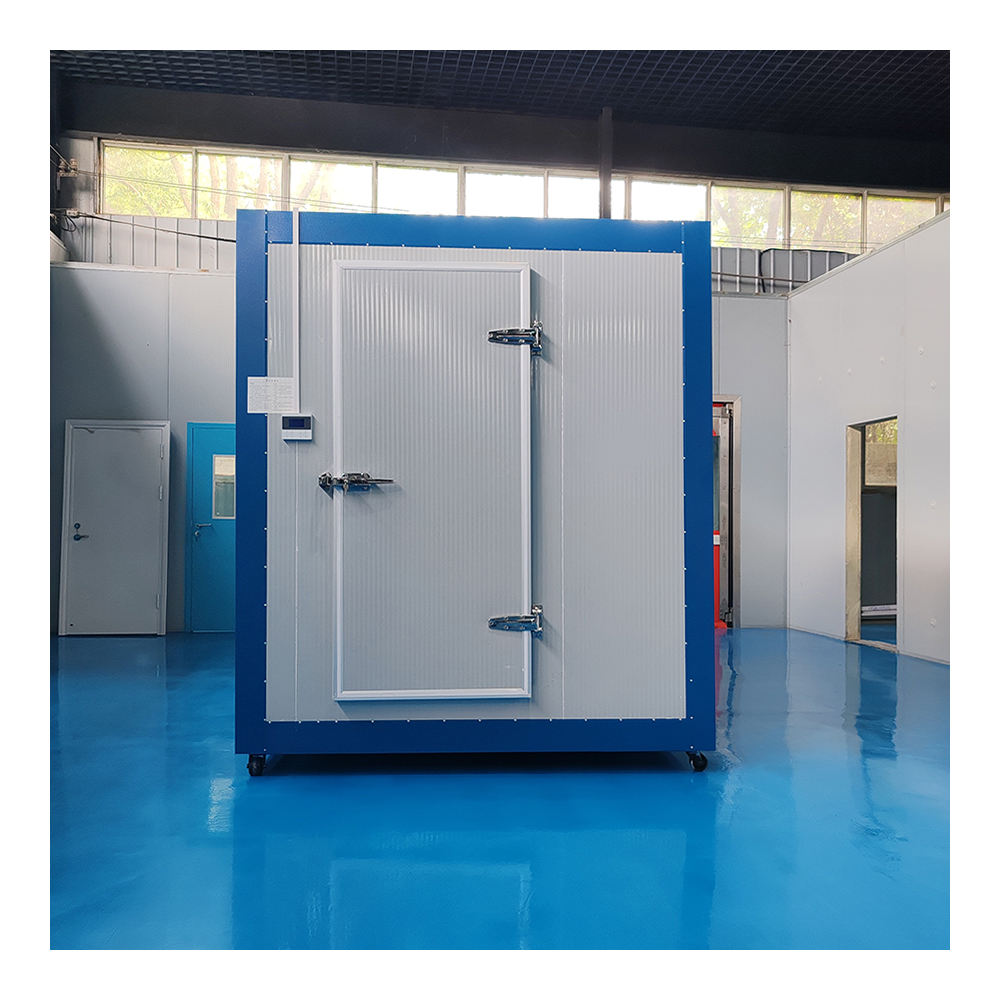
Facility renovations are notoriously disruptive. Kitchen upgrades often force operations to shut down. This leads to massive revenue losses. A trailer-mounted unit serves as a perfect primary bridging solution. You can keep operations running smoothly. Staff access ingredients right outside the back door. You avoid shutting down during crucial operating hours. Best Practice: Stage the temporary cooler near the kitchen prep area. This minimizes staff travel time. It reduces fatigue during busy service shifts. You maintain continuous workflow without dodging construction crews.
Sinking capital into leased property is risky. Landlords rarely reimburse you for built-in upgrades. You lose that investment when your lease ends. A temporary unit leaves no structural footprint. You avoid complicated tenant improvement negotiations. You simply roll the unit away on moving day. It moves seamlessly with your growing business. This preserves your working capital. Common Mistake: Always review your commercial lease agreement carefully. Some landlords restrict outdoor storage units in parking lots. You must get written permission before scheduling delivery.
Many businesses experience extreme seasonal demand spikes. Farmers need massive capacity during harvest time. Restaurants require extra prep space for holiday turkeys. Caterers need reliable cooling for large summer festivals. You can scale capacity temporarily for these peaks. Renting prevents you from paying for idle space. A massive built-in cooler often sits empty in February. We recommend modular solutions for this exact reason. You match your cooling capacity directly to your seasonal revenue. You return the unit when the busy season ends.
Equipment failures happen without warning. Catastrophic compressor failure threatens your entire inventory. The food safety clock starts ticking immediately. You must deploy an emergency solution rapidly. Renting a trailer mitigates this massive inventory loss. Local providers often deliver within hours. You transfer your perishables before they reach the danger zone. It acts as an operational lifeline. Best Practice: Keep a rental provider on speed dial. Do not wait for a breakdown to research your options. Proactive planning saves thousands of dollars.
Indoor square footage is incredibly expensive. Facilities often max out their available floor plans. You simply cannot squeeze another cooler inside. Mobile units safely utilize outdoor parking spaces. They fit neatly into underused loading dock areas. You completely avoid expensive building extensions. Your indoor workflow remains perfectly clear. You optimize your existing footprint without pouring new concrete. A permanent walk in cold room requires significant indoor space. Outdoor placement solves this dilemma instantly while saving construction costs.
Property owners plan for decades, not months. They benefit greatly from permanent infrastructure. You amortize the upfront buildout cost over many years. Fixed units become highly cost-effective eventually. You customize them to fit exact architectural dimensions. This maximizes every available inch of your property. They add tangible permanent value to the building envelope. If you plan to stay for twenty years, choose permanence. The long-term stability justifies the initial construction delays.
Warehouses rely heavily on fast material handling. High-turnover food processors require extreme efficiency. You need flush floor transitions for heavy carts. Wider doors are essential for constant forklift traffic. Standard trailers cannot easily accommodate this heavy machinery. They sit higher off the ground. Ramps become a dangerous bottleneck for pallet jacks. Built-in setups handle this intense industrial abuse flawlessly. They withstand constant loading and unloading cycles. We see warehouses heavily prefer permanent walk in cold room designs for superior logistics.
Certain industries demand extreme climate control. Ultra-low temperature pharmaceutical storage requires rigorous engineering. Multi-zone mortuary coolers need highly specific designs. Complex humidity-controlled environments demand precise internal airflows. These scenarios require bespoke, fixed integration. You embed specialized sensors deep into the walls. Contractors install redundant backup systems inside the facility. A temporary unit cannot match this level of custom integration. Health inspectors demand rigorous compliance for these sensitive applications. Permanent structures offer the highest level of environmental stability.
You must evaluate your physical ground space carefully. Assess ground leveling before accepting any delivery. Asphalt can sink under heavy trailer weight. Ensure you provide a stable, reinforced pad. Check the turning radius for the delivery truck. You need clear overhead clearance for drop-offs. Outdoor units require robust security measures. We highly recommend installing perimeter fencing. Strong padlocks are an absolute necessity. Monitor the area with dedicated security cameras. Proper placement prevents accidental damage from delivery vehicles.
Clarify your exact voltage requirements early. Smaller units might use standard 115V plugs. Larger systems need 220V or 230V single-phase power. Massive industrial units demand three-phase power connections. You must provide dedicated electrical circuits.
Follow these electrical preparation steps:
Hire a certified commercial electrician for an inspection.
Verify your main breaker panel capacity handles the load.
Install quick-disconnect devices near the unit for safety.
Test the circuit for stable voltage during peak usage.
Never use standard extension cords. They cause severe voltage drops. This damages the compressor permanently. A mobile cold room requires consistent, reliable amperage at all times.
Regulatory compliance applies equally to both unit types. Health departments treat them exactly the same. You must ensure consistent temperature logging. Use automated HACCP-compliant sensors. Install FDA-approved, food-grade shelving inside. Guarantee OSHA-compliant access for all your staff. Implement strict stair safety protocols for trailer steps. Use high-quality non-slip flooring. Always verify internal emergency releases function properly. Staff must never get trapped inside. Schedule routine safety audits monthly to maintain perfect compliance records.
Let us review the summary matrix for your decision:
Choose a fixed built-in unit for permanent capacity in owned facilities.
Invest in fixed units for high-volume, pallet-jack operations.
Choose a modular unit for immediate emergency deployment.
Rent temporary units for leased spaces and seasonal flexibility.
We encourage readers to conduct a thorough site audit. Measure your available footprint carefully. Check your electrical panel capacity next. Review your lease terms regarding temporary outdoor structures. Gather all this data before requesting vendor quotes. Always plan your capacity needs carefully based on future growth projections. For specialized guidance, you can reach out directly to industry experts. Feel free to contact our team to discuss your next walk in cold room project.
A: Generally, you do not need planning permission for temporary use. However, long-term placements may trigger local zoning restrictions. Always check your HOA-style industrial park ordinances before delivery. Some municipalities limit how long trailers can sit in commercial parking lots without permits.
A: Yes. Quality mobile freezer trailers reliably maintain freezing temperatures. They can reach down to 0°F (-18°C) or lower. It entirely depends on the compressor specifications. Modern modular units use commercial-grade refrigeration systems identical to fixed setups.
A: It depends heavily on regional availability. Many providers offer same-day or 24-hour deployment. Once delivered, the unit typically reaches target temperatures within a few hours of plugging in. This makes them perfect for sudden emergency recoveries.
A: This depends completely on your timeline. Rentals win financially for less than 12-18 months of continuous use. Fixed builds win for 5+ year permanent installations. You must calculate your long-term operational duration before making this choice.


