
Views: 0 Author: Site Editor Publish Time: 2026-10-15 Origin: Site
High-traffic cold storage facilities bleed profitability through open doors. Air infiltration accounts for a significant percentage of a facility's total cooling load. You cannot ignore this daily energy drain. Selecting the right barrier requires more than just checking insulation values. It represents a delicate balancing act. You must weigh static thermal resistance against dynamic operational cycle times. Evaluating your options demands a hard look at your warehouse environment. You need to align your operational workflow against basic thermal dynamics. Physical footprint constraints also limit your viable choices. We will explore how different barrier mechanisms impact your bottom line directly. You will learn to match door styles to specific traffic frequencies. This knowledge helps optimize energy savings and maintain strict temperature control. By making the right choice, you protect your valuable inventory. You also extend the lifespan of your critical refrigeration equipment.
Thermal Conduction vs. Air Infiltration: Heavily insulated doors prevent conduction when closed, but slow opening speeds allow massive air infiltration during operation.
Traffic Dictates Type: Hinged doors suit pedestrian or low-frequency access; sliding doors handle moderate traffic and save space; high-speed doors are mandatory for forklift-heavy, continuous workflows.
TCO Trumps Initial Price: The true cost of a cold storage door includes energy loss, compressor wear from temperature spikes, and maintenance downtime from equipment impacts.
Hybrid Solutions: Many high-volume freezer rooms require a dual setup (a heavy sliding door for night-time closing and a high-speed door for operating hours).
Let us define the hidden costs clearly. Every time someone opens the portal, air moves. Warm ambient air rushes into the freezing space. Cold, heavy air spills out across your floor. We call this phenomenon air infiltration. This single action destroys your baseline energy efficiency. Refrigeration compressors must work exponentially harder to compensate. Prolonged open times force these units into overdrive. They run continuously to stabilize the internal climate. This mechanical strain drastically reduces their operational lifespan. It inevitably leads to expensive, premature equipment replacements.
Moisture ingress creates equally severe secondary problems. Warm air carries high levels of humidity inside. This invisible moisture condenses instantly upon entry. It hits cold surfaces and turns to ice. Floor icing creates massive slip hazards immediately. Forklift operators lose traction in these dangerous zones. Accidents happen frequently when floors remain slick. Furthermore, the moisture attacks your overhead evaporator coils. Heavy frost builds up on the delicate aluminum fins. This frost chokes the required airflow completely. The system must then initiate frequent defrost cycles. Defrosting consumes massive amounts of electricity daily.
A successful specification meets strict performance criteria. You must evaluate your next installation against these operational targets:
Minimize air exchange volume during every single open-close cycle.
Withstand relentless operational abuse from heavy material handling equipment.
Maintain a strict, impenetrable thermal barrier while standing idle.
Prevent moisture from bypassing the primary perimeter seals.
Let us explore the core mechanism in detail. Hinged configurations rely on highly robust perimeter gaskets. Manufacturers pack them full of heavy polyurethane insulation. This dense core provides maximum thermal resistance possible. The mechanism compresses the gasket tightly upon closing. We see these units frequently in specific environments. They perform best in low-traffic warehouse areas. They work perfectly for pharmaceutical cleanrooms. They serve well at tight pedestrian access points. Operators do not need fast cycle speeds here.
We evaluate them across several critical dimensions. You should consider these pros and cons:
Exceptional hermetic sealing capabilities prevent virtually all static air leaks.
They carry the lowest initial procurement cost among commercial options.
Minimal mechanical parts reduce unexpected maintenance breakdown events significantly.
They require significant swing clearance inside the interior room.
Forklifts often impact them severely if workers leave them open.
Slow manual operation leads to massive heat loss per cycle.
Implementation risks demand your careful attention. Heavy insulated panels often suffer from severe sagging. Gravity pulls them down over several years. You must specify heavy-duty, appropriately rated hardware. We strongly advise using specialized cam-lift hinges. They lift the door slightly during the swing arc. This action saves the bottom gasket from tearing. A well-maintained cold room door of this type lasts for decades.
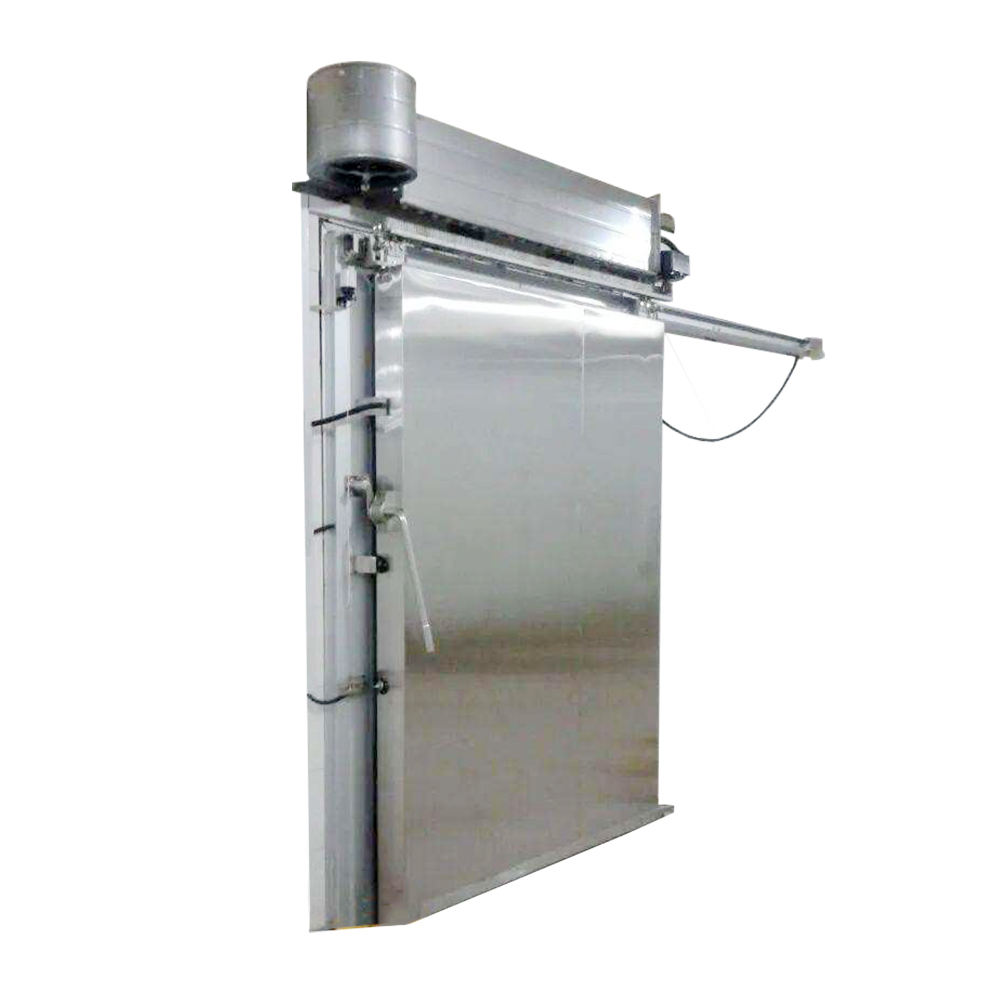
Let us look at the core sliding mechanism. These units track smoothly parallel to the wall. You can order manual or fully automated configurations. They offer incredibly high static R-values. Crucially, they deliver this without demanding swing clearance. This makes them the space-saving industry standard. We recommend them for moderate-to-high traffic cold rooms. They accommodate wide forklift entry points easily. Facilities with limited aisle space rely on them heavily.
Consider the evaluation dimensions carefully. Zero swing clearance frees up your valuable floor space. You can stack pallets much closer to the opening. They provide genuinely excellent thermal sealing. Advanced drop-down track systems make this possible. The track forces the heavy panel downward. It pushes the door inward against the wall simultaneously. This ensures tight floor and frame compression. You can adapt them easily to facility automation systems.
They do have recognized operational limitations. They operate much slower than flexible roll-up options. You must reserve empty adjacent wall space. The door needs this space for its run-off.
Trust requires verification in busy, active environments. Automated sliding systems improve cycle times drastically. Operators stay on their vehicles during transit. However, safety sensors demand rigorous daily maintenance. Frost can blind photo-eye sensors quickly. Faulty sensors might close the panel prematurely. A heavy panel impacting a moving pallet causes damage. Regular inspections keep your cold room door operating safely.
Let us analyze the high-speed roll-up category. Rapid vertical opening defines this core mechanism. These units operate at truly incredible velocities. Speeds often exceed two full meters per second. They utilize flexible, thinly insulated fabric curtains. We specify them for high-volume logistics hubs. Busy loading docks benefit massively from their installation. They handle freezer-to-chiller transitions with extreme efficiency. Forklifts move continuously through these specific checkpoints.
Let us examine their unique evaluation dimensions. Their primary advantage lies in airflow control. They drastically reduce unwanted air infiltration. They achieve this by minimizing total open time. Many models feature ingenious self-repairing track systems. Break-away bottom edges survive accidental forklift impacts. The curtain pops out of the side guides. It then resets itself automatically on the way up.
They do possess notable operational drawbacks. They offer a lower static R-value than rigid options. They require a significantly higher upfront capital investment. Deep-freeze applications require actively heated guide tracks. Internal heater cables prevent the fabric from freezing. Ice buildup would otherwise jam the moving curtain.
Evidence points to a clear, undeniable operational reality. Busy facilities need to block warm air ingress. The energy saved during hundreds of daily cycles matters. This dynamic efficiency easily outweighs the lower static insulation. Fast opening speeds protect the internal climate better. A rapid cold storage door protects your bottom line best.
Traffic frequency dictates your initial direction. You must calculate your daily open and close cycles. Note the type of equipment crossing the threshold. Pedestrians require different clearances than heavy electric forklifts. Pallet jacks operate at different speeds altogether. Your equipment dictates the necessary opening velocity.
Evaluate the exact temperature delta carefully. Look at the temperature difference between adjacent zones. Ambient-to-freezer boundaries demand heavily heated frames. Moisture freezes instantly across these extreme transitions. Chiller-to-chiller transitions might not need active heating elements.
Compliance drives your specific material selection. Food-grade storage requires perfectly seamless panel designs. Bacteria hide in tiny cracks and crevices. Pharmaceutical environments demand strict wash-down capable materials. Stainless steel hardware prevents dangerous rust formation. Specialized PVC curtains dominate these highly regulated sectors.
Many managers embrace a strategic hybrid approach. Peak-demand scenarios require creative engineering solutions. We frequently recommend pairing two different technologies together. Install a heavy automated sliding unit for the night. It provides maximum thermal security during idle hours. Add a high-speed fabric unit just behind it. Use this rapid option for daytime operational efficiency.
Table 1: Application Matrix for Cold Storage Facilities
Technology Type | Ideal Traffic Volume | Sealing Capability | Best Use Case |
|---|---|---|---|
Hinged (Swing) | Low / Pedestrian | Exceptional | Cleanrooms / Narrow Access |
Sliding (Rigid) | Moderate to High | Very Good | Forklift Aisles / Space Constrained |
High-Speed Fabric | Very High / Continuous | Moderate | Loading Docks / Logistics Hubs |
Hybrid Setup | Variable (24/7 Ops) | Exceptional (Night) / Moderate (Day) | High-Volume Freezer Rooms |
Installation requires strict footprint verification first. You must measure your adjacent wall clearances carefully. Sliding models need room to slide completely open. High-speed roll-ups need sufficient overhead ceiling heights. The overhead barrel assembly takes up vertical space. Floor leveling remains absolutely crucial for success. Uneven floors destroy hermetic bottom seals instantly. Warm air will leak through any tiny floor gap.
Maintenance realities require honest operational planning. Anticipate ongoing costs for track realignments. Sensor replacements happen frequently in busy loading docks. You must check heated gasket elements before winter arrives. Broken heaters lead to frozen panels and torn gaskets.
Follow a strict shortlisting logic during procurement. Avoid specifying based solely on capital expenditure. Upfront costs tell only a fraction of the story. Ask manufacturers for detailed return on investment calculations. Base these numbers on your exact local energy rates. Factor in your estimated daily cycle times accurately. Include projected maintenance intervals in your final math. A well-chosen cold storage door pays for itself rapidly through energy savings.
Document your facility traffic patterns today. Map out your specific temperature zones clearly. Complete this homework before engaging any supplier. Request a technical site evaluation to confirm your findings.
Preventing heat loss requires a fundamental mindset shift. You must move away from demanding the thickest insulation. You must focus instead on smarter, faster cycle management. Slow, thick panels lose more energy than fast, thin ones in active environments. High-speed models always win on workflow efficiency. Hinged models win decisively on static sealing capabilities. Sliding models offer a highly reliable, space-saving middle ground. Evaluate your facility operations this week. Consult directly with a specialized thermal barrier expert. Ask them to audit your current energy losses. Let them analyze your specific traffic requirements. Take decisive action to stop your daily energy drain.
A: In continuous 24/7 operations, yes. For facilities with long idle periods, a hybrid setup is safer for energy efficiency.
A: Condensation from temperature deltas freezes on seals. Prevent this by specifying doors with thermostatically controlled heater cables in the frames and thresholds.
A: They reduce the total "open time" because drivers don't have to dismount to close them, effectively cutting air infiltration by half, even if the travel speed of the door is identical.


