
Views: 0 Author: Site Editor Publish Time: 2026-09-09 Origin: Site
Fragmented cold storage projects carry massive financial and operational risks. Product loss and compliance failures often stem from poorly integrated systems. You might lose entire batches of sensitive vaccines or spoil tons of fresh seafood due to unstable temperatures. A wide gap exists between a vendor who simply sells insulated panels and a true engineering partner. A real partner designs a fully integrated, temperature-controlled environment tailored specifically to your operational demands. Relying on disconnected contractors leaves you vulnerable to design flaws and unexpected system crashes. To protect your investment, you must vet a potential cold room supplier thoroughly. Evaluate them based on their ability to own the entire project lifecycle. They must handle everything from initial thermal load calculations to final site validation. Only complete engineering services can ensure consistent performance and strict regulatory compliance. You will learn exactly how to distinguish basic equipment resellers from fully capable engineering partners below.
True turnkey cold storage requires end-to-end accountability: design, installation, validation, and maintenance under one roof.
A credible supplier relies on data-driven refrigeration engineering (thermal modeling, product throughput) rather than generic sizing templates.
The transition from construction to operation hinges on rigorous commissioning protocols, not just a standard power-on test.
Robust after-sales infrastructure is a non-negotiable metric for evaluating supplier capability and minimizing future downtime.
Many companies struggle significantly when they buy components from multiple vendors. You might purchase insulated panels from one company and compressors from another. This fragmented procurement model creates huge integration risks. When the system inevitably underperforms, vendors quickly blame each other. The panel supplier might blame the refrigeration unit. The refrigeration supplier might blame poor door seals. An integrated engineering approach solves this exact business problem.
We define complete engineering services through three primary success criteria. First, you receive a single point of contact for the entire facility. Second, the provider guarantees overall system performance, not just individual part function. Third, they minimize integration risks through holistic, upfront design. These elements separate true partners from transactional resellers.
You must watch out for clear red flags during the quoting process. Transactional vendors often reveal their limitations early.
They quote a price based solely on room dimensions.
They never ask about your product ingress or egress temperatures.
They ignore your daily door opening frequencies.
They fail to consider the specific heat capacity of your stored goods.
A true engineering partner investigates every operational detail. They require comprehensive data before they even draft a preliminary proposal.
Evaluating how a supplier approaches the initial design phase reveals their actual capabilities. You need a partner who engineers a custom solution. Avoid providers who rely heavily on generic sizing charts. Generic templates usually lead to oversized, inefficient systems or undersized, failing units.
Always demand proof of custom thermal load calculations. Standard templates fail because every facility operates quite differently. A capable engineering team assesses the latent heat generated by your stored products. Imagine storing thousands of pounds of fresh produce. The natural respiration of these fruits generates continuous latent heat. The system must account for this constant thermal load.
They must also factor in ambient temperature extremes outside your facility. What happens if your warehouse roof reaches 120°F during summer? The insulation and refrigeration capacity must handle this peak stress. Furthermore, they analyze door opening frequencies, forklift traffic, and facility integration points. If they do not actively request these details, you should find another provider.
You must verify their ability to design for specific industry standards. Pharmaceutical applications require strict Good Manufacturing Practice (GMP) adherence. Food processing facilities demand rigorous Hazard Analysis and Critical Control Points (HACCP) compliance. The FDA sets incredibly tight parameters for environmental mapping and data logging. Your supplier must navigate these regulations flawlessly.
Ask to see detailed Piping and Instrumentation Diagrams (P&ID) early on. Review the detailed CAD layouts before you sign any contracts. Proper documentation proves they understand complex regulatory demands. It also ensures maintenance teams can easily service the equipment years later.
Table 1: Vendor Approach vs. Engineering Partner Approach
Evaluation Metric | Equipment Reseller | Complete Engineering Partner |
|---|---|---|
System Sizing | Uses basic room dimensions and generic charts. | Conducts custom thermal load calculations. |
Regulatory Focus | Leaves compliance up to the end-user. | Designs specifically for FDA, GMP, or HACCP standards. |
Documentation | Provides basic equipment manuals. | Delivers detailed P&ID and CAD layouts. |
Accountability | Blames other contractors for system failures. | Takes full responsibility for overall performance. |
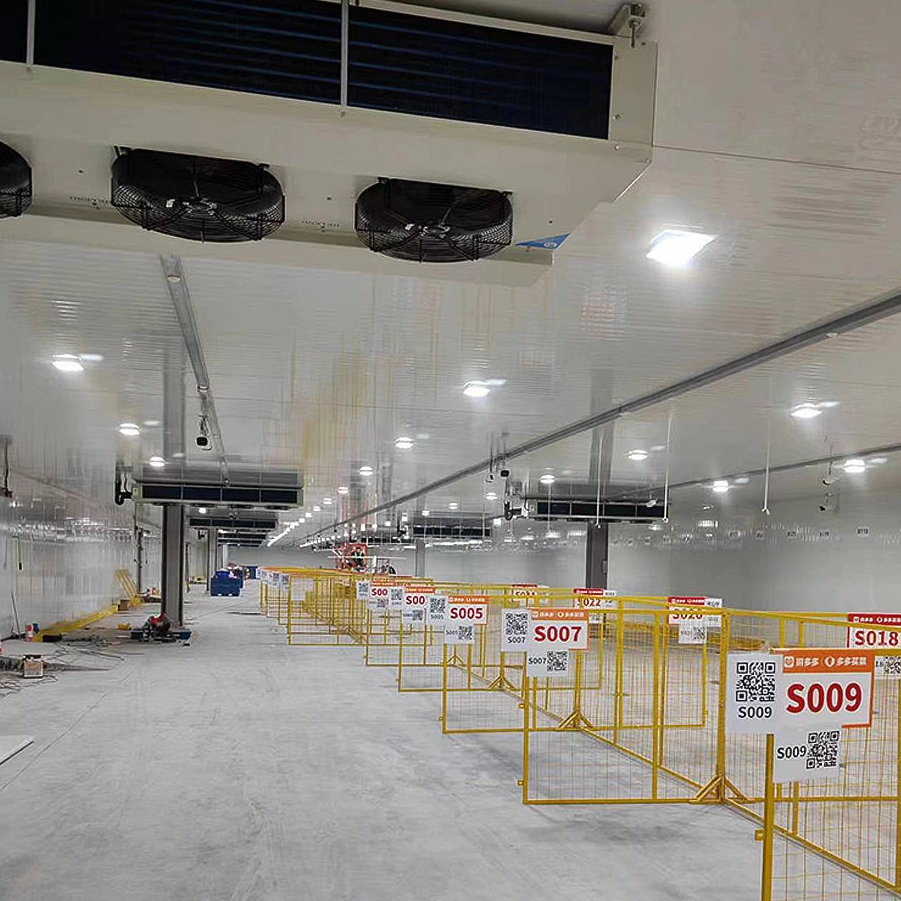
Perfect engineering designs mean absolutely nothing if construction execution falls short. Poor physical assembly easily compromises the entire temperature-controlled environment. The implementation phase carries massive risks. You must evaluate how the supplier transitions from blueprints to actual construction.
Evaluate whether the supplier uses their own in-house installation teams. Many companies rely heavily on third-party subcontractors. This handoff often degrades the final build quality significantly. Subcontractors might rush vapor barrier sealing to save time and move to the next job. Poor panel joint sealing leads directly to moisture intrusion and interstitial condensation.
Once moisture enters the insulated panels, it freezes and destroys the structural integrity. Incorrect piping insulation causes dangerous energy leaks and surface condensation. Complete engineering partners maintain direct control over the entire cold room installation process. They use specially trained technicians who understand the rigorous demands of thermal barriers. This direct oversight prevents catastrophic structural failures.
Look for a dedicated site manager assigned to your specific project. This individual leader bridges the gap between engineering blueprints and physical reality. They ensure technicians follow the exact design specifications without taking unauthorized shortcuts. Site managers coordinate critical timing.
They manage electricians, plumbers, and the concrete teams pouring the insulated floor. When unexpected structural issues arise on site, the manager adapts the plan safely. They consult the engineering team before altering any piping routes. Without strong project management, installation becomes chaotic, delayed, and highly error-prone.
The handover process ultimately proves the engineering's true validity. Promised features only matter if they translate to reliable, measurable outcomes. You must demand proof that the system operates exactly as designed before accepting the facility.
A simple power-on test verifies nothing about operational resilience. Turning on the equipment is merely the first step. You must define comprehensive commissioning clearly in your initial contract. Technicians must test the system under simulated operational loads.
They should never just run an empty-room temperature pull-down. An empty room cools down quickly and easily. Real-world conditions involve constant disruptions. The facility must recover quickly after simulated door openings. Technicians must validate the defrost cycle recovery times. They need to ensure the system handles peak thermal stress without triggering high-temperature alarms.
Require transparent performance logs during the final handover. You need detailed temperature mapping reports for future regulatory audits. Technicians should place data loggers at various heights and corners to prove uniform cooling. Ensure they provide calibration certificates for all permanent sensors.
Moreover, the provider must offer comprehensive operator training for your facility staff. Your team must know how to respond to alarms properly. They need to understand how to adjust setpoints safely via the PLC interface. A successful handoff empowers your staff to run the facility confidently.
Post-installation reality checks determine the long-term success of your facility. Equipment will inevitably face wear and tear over time. How your supplier responds to these challenges defines their overall value. You need a robust support infrastructure to minimize future downtime.
Evaluate their service level agreements carefully before signing. Reactive maintenance means you wait for a breakdown before getting help. This approach guarantees product loss during a major failure. Conversely, predictive maintenance stops failures long before they happen. Do they offer remote monitoring and predictive diagnostics?
You need a partner who identifies failing components digitally. Modern systems use IoT sensors to track compressor vibration and power consumption. The supplier should receive automated alerts if a motor starts drawing excess current. Emergency dispatch alone is no longer sufficient for mission-critical storage facilities. Predictive capabilities represent the gold standard in modern support.
Assess their internal inventory of critical spare parts. Waiting three weeks for a specialized compressor valve ruins stored inventory completely. Ask them where they stock replacement parts. Check the geographic proximity of their certified refrigeration technicians. Evaluate their guaranteed response times documented in the service agreement.
You need rapid access to experts who understand your specific system architecture. Generic technicians often struggle to troubleshoot complex, custom-engineered control panels. A reliable partner guarantees immediate access to original equipment manufacturer (OEM) parts and highly trained specialists.
You need a logical, step-by-step framework for the final evaluation phase. This shortlisting logic separates top-tier engineering firms from average vendors. Do not skip these verification steps, as they reveal the supplier's true operational history.
Follow these specific steps to vet your final candidates thoroughly:
Ask for detailed case studies of similar scale and similar temperature requirements.
Request to interview a past client specifically regarding unexpected on-site challenges.
Ask the past client how quickly the supplier resolved those unexpected problems.
Demand transparent warranties covering both physical equipment and installation workmanship.
Review their safety records and specific compliance certifications.
Past behavior predicts future performance accurately. A supplier who successfully navigated a complex, heavily regulated pharmaceutical build can likely handle your strict requirements. Pay close attention to how they discuss past mistakes and resolutions.
Do not ask for a simple price quote right away. Instead, request a preliminary engineering consultation. You can easily gauge their expertise by the questions they ask you. A capable engineering team probes deeply into your operational needs. They will ask about peak product loading times and future expansion plans. If they just ask for length, width, and height, walk away immediately.
A reliable supplier removes the dangerous guesswork from your project completely. They provide unified engineering, construction, and support securely under one roof. Upfront savings on a fragmented build usually backfire quickly. Buying cheap components independently leads to exponential operational burdens. System inefficiencies and premature equipment failures quickly erase any initial purchasing discounts.
Protecting your temperature-sensitive inventory requires a fundamentally different approach to procurement. You must prioritize engineering depth over surface-level equipment pricing. Audit your current vendor proposals using the strict criteria outlined above. Discard any quotes lacking comprehensive thermal modeling and robust service guarantees. Alternatively, contact a qualified engineering team directly for a technically sound project assessment. Take action today by mapping your exact thermal load requirements and updating your vendor qualification checklist accordingly.
A: Installation is purely the mechanical assembly of panels and components. Full-service engineering covers initial capacity planning, complex thermal load modeling, and strict regulatory compliance. It ensures seamless, custom integration into your existing facility infrastructure for optimal, long-term performance.
A: It physically validates whether the theoretical design meets real-world performance parameters under stress. Proper testing ensures product safety and regulatory compliance before the facility ever goes live. It prevents incredibly expensive operational surprises during your peak production seasons.
A: You should expect detailed preventative maintenance schedules and 24/7 remote system monitoring. Look for rapid-response emergency repair capabilities outlined in a clear service agreement. A reliable partner also guarantees OEM parts availability to minimize any costly facility downtime.


