
Views: 0 Author: Site Editor Publish Time: 2026-10-08 Origin: Site
Industrial refrigeration often claims up to 50% to 70% of a facility’s total energy footprint in warehousing and food processing. You might assume this massive operational expense is simply the unavoidable cost of doing business. High utility bills create a widely accepted pain point across the global supply chain. However, invisible inefficiencies actively erode your profit margins every single day.
Lowering this massive energy spend does not mean you have to compromise product integrity or food safety standards. Instead, it requires you to identify specific thermal leaks across your facility. You must shift your mindset from accepting inevitable costs to aggressively preventing preventable thermal losses. In this guide, we will explore how to establish a precise thermodynamic baseline. We will pinpoint exactly where the largest thermal losses occur in everyday operations. You will discover practical ways to evaluate physical barrier technologies and automate crucial mechanical cycles. Finally, you will learn how tightening your thermal envelope directly safeguards your valuable inventory during unexpected power outages.
Baselines Vary: Cold room energy consumption depends heavily on size, delta-T (temperature difference), and turnover rate, but typically ranges from 30 to 50 kWh/m³/year for industrial spaces.
Infiltration is the Enemy: Unmanaged doorways (air exchange) are responsible for up to 50% of preventable thermal loss.
CapEx vs. OpEx: Investing in modern barriers (e.g., air curtains) or smart thermal storage often yields an ROI within 18–24 months via reduced cold storage electricity costs.
Risk Mitigation: Energy efficiency directly ties to facility resilience—lower baseline consumption makes battery backup and solar integration more viable during power outages.
You cannot manage what you do not measure accurately. Facility managers must understand the thermodynamic reality of industrial refrigeration. There is no standard operational cost that applies uniformly across the industry. A refrigeration compressor fights a continuous, grueling battle against incoming heat load. This heat load originates from four distinct thermodynamic sources.
Transmission load happens because no architectural insulation is perfect. Heat constantly bleeds from warm exterior walls into the chilled interior space. Product load occurs the moment you introduce warmer pallets into the storage zone. Internal load comes from the machinery operating inside the room, including forklift motors, overhead lighting, and evaporator fans. Finally, infiltration load happens whenever doors open and outside air rushes inside.
To establish an accurate baseline, facility managers must track several highly specific variables:
Volume of the cold room: Measure the total internal cubic meters (m³) requiring conditioning.
Temperature differential: Calculate the delta-T, which is the gap between the peak ambient external temperature and your required internal setpoint.
Compressor and evaporator efficiency: Track your equipment's Coefficient of Performance (COP) under real load conditions.
Turnover rate: Document how often product enters and exits the facility daily.
We strongly advise conducting a data-driven assessment using electrical sub-metering. Clamp-on sub-meters isolate exactly how much power your compressors and fans draw hourly. You should complete this audit before evaluating any new vendor solutions. Never rely strictly on manufacturer nameplate data to estimate your costs. Aging mechanical equipment rarely reflects factory-rated efficiency in real-world environments. Accurate sub-metering reveals your true cold room energy consumption patterns, exposing the gap between expected and actual performance.
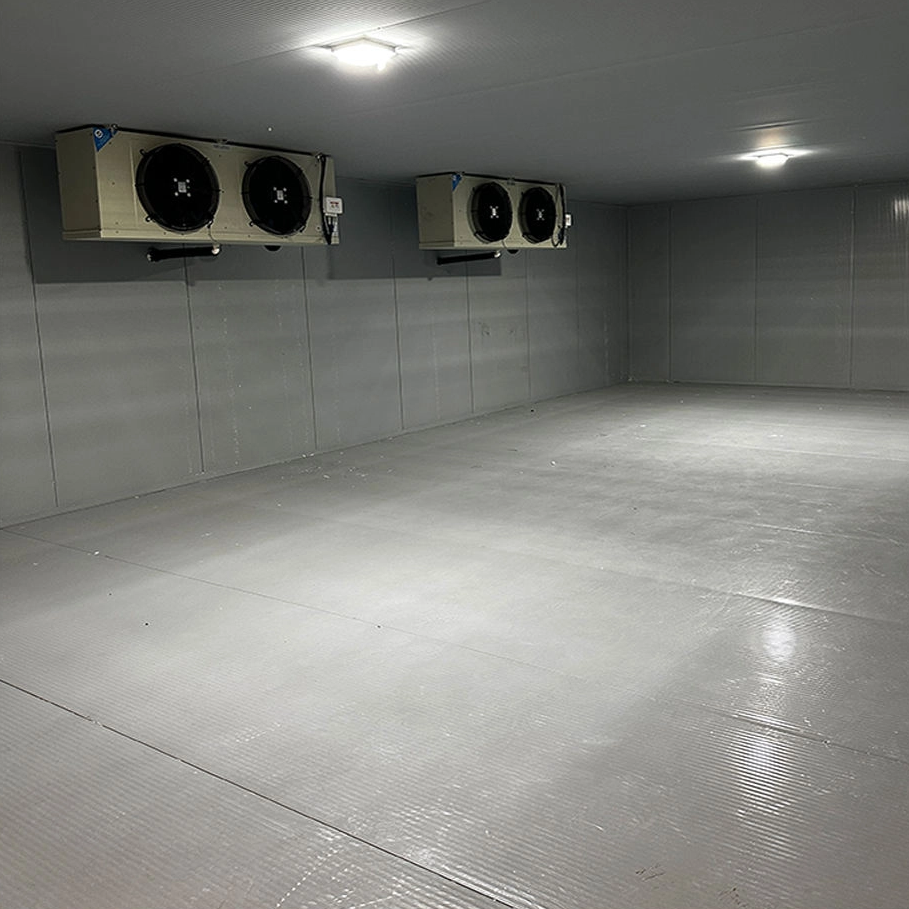
Air exchange represents the most aggressive source of preventable energy waste. The physics governing this are simple but destructive. Cold air is incredibly dense. It drops rapidly toward the floor and pours out of the facility the moment doors open. Simultaneously, warm, moisture-laden external air rushes in near the ceiling to replace it. This creates two distinct problems. First, the compressor must work harder to cool the new warm air. Second, the incoming moisture condenses and freezes on the evaporator coils. High-traffic loading docks multiply this thermodynamic loss exponentially. Unmanaged doorways easily drain operational budgets.
Physical wear takes a heavy toll on storage facilities over time. Aging panel joints and damaged door seals create direct thermal bridges. A thermal bridge acts as a highway for outside heat to bypass your insulation. Furthermore, compromised floor insulation leaks vital cooling directly into the ground substrate beneath your facility. These hidden structural failures force your compressors to run continuously. They destroy efficiency because the envelope constantly bleeds temperature, regardless of external weather conditions.
Evaporator coils naturally accumulate ice. This ice buildup chokes the coils and severely restricts mechanical airflow. However, timer-based defrosting wastes massive amounts of operational power. Legacy systems activate heating elements inside a freezing environment based on an arbitrary clock. They run whether the coils hold ice or remain perfectly clean. This introduces totally unnecessary heat into your storage zone. Your compressors must then consume extra power to remove the heat the defrost cycle just created. Demand-based defrosting solves this problem intelligently using targeted sensors.
Workers often create massive energy drains without realizing the financial impact. These represent primary, zero-cost-to-fix operational drains. Warehouse staff frequently wedge doors open during long loading shifts for convenience. Forklift drivers routinely stack bulk pallets too close to the evaporator units. This poor loading practice blocks critical return airflow. When airflow is blocked, fans work harder to push less air, drastically reducing system efficiency. Correcting these specific human habits instantly lowers your overall cold storage electricity cost.
Procurement teams need a clear, objective decision framework when upgrading physical barriers. You must compare physical interventions based on initial CapEx, routine maintenance requirements, and outcome reliability. Do not purchase solutions based solely on the lowest initial price tag.
Traditional strip curtains offer low initial CapEx. They provide immediate, albeit partial, mitigation against air exchange. However, they suffer from exceptionally high wear-and-tear. Forklifts scratch, tear, and rip the PVC material daily. This degradation creates severe visibility hazards for drivers. Torn curtains also pose hygiene compliance risks in food-grade facilities. They quickly lose their thermal sealing effectiveness.
High-velocity air curtains provide a technologically superior alternative. They create an invisible aerodynamic barrier across the open doorway. Properly calibrated air curtains are up to 80% effective at stopping air infiltration. Because they are invisible, they experience absolutely zero physical wear from forklift traffic. The primary drawback is a higher initial CapEx. They also require precise wind shear calibration to optimize the air stream against external drafts.
Thermal Barrier Decision Matrix
Technology Type | Primary Advantages (Pros) | Primary Disadvantages (Cons) | Typical ROI Timeline |
|---|---|---|---|
Standard PVC Strip Curtains | Lowest CapEx; easy to install; immediate partial airflow blockage. | High physical wear; forklift damage; reduces driver visibility; hygiene risks. | 3 to 6 months |
High-Velocity Air Curtains | Invisible barrier; up to 80% effective; zero physical wear; high safety. | Higher initial CapEx; requires wind shear calibration; uses minor electricity. | 12 to 18 months |
High-Speed Rapid Roll Doors | Excellent thermal seal; minimal open time; handles high traffic well. | Highest CapEx; requires regular mechanical maintenance; impact risk. | 18 to 24 months |
Instruct your engineering teams to apply a strict mathematical evaluation lens. Calculate the ROI of an air curtain or rapid-roll door by measuring the daily cost of compressor over-work. Track how many extra hours the compressor runs due to current doorway losses. Multiply those wasted kilowatt-hours by your utility rate. Compare this daily financial waste against the installed cost of the new barrier technology.
Tightening ESG (Environmental, Social, and Governance) regulations and impending carbon taxes demand systemic infrastructure upgrades. Large-scale processing facilities must adapt their mechanical systems to survive in this new regulatory climate. Relying on outdated on/off mechanical logic is no longer financially viable.
Variable Frequency Drives (VFDs) offer a powerful, immediate mechanical upgrade. Legacy compressor motors operate on a harsh binary system—they are either completely off or running at 100% capacity. VFDs change this dynamic entirely. They allow compressor motors and evaporator fans to match internal load demand dynamically. By adjusting the electrical frequency, VFDs eliminate brutal on/off cycling spikes. According to the affinity laws of thermodynamics, reducing a fan's speed by just 20% can cut its energy consumption by nearly 50%.
You should also explore the emerging strategy of integrating Cold Thermal Energy Storage (CTES) with solar arrays. This concept allows you to literally freeze a thermal battery during off-peak hours. Facilities run compressors hard when solar energy production peaks or utility tariffs drop to overnight lows. They freeze phase change materials, such as eutectic salts or glycol tanks. Facility managers then use this stored cooling capacity to offset grid reliance during expensive peak pricing periods. This intelligent strategy radically transforms your baseline cold room energy consumption profile.
However, implementation carries specific engineering realities that you must address:
Footprint Requirements: Integrating robust CTES requires sufficient floor footprint to house the thermal tanks safely.
System Compatibility: You must ensure the new storage media integrates perfectly alongside your existing ammonia or freon infrastructure.
Load Shifting Logic: The facility requires advanced control algorithms to switch seamlessly between active mechanical cooling and passive thermal storage.
Energy efficiency represents critical risk management, not just a line-item cost saving. You must frame thermal integrity as a core pillar of facility resilience. An inefficient, leaky envelope loses internal temperature rapidly during a grid power cut. Every damaged seal and torn strip curtain accelerates thermal loss. This rapid warming accelerates total product spoilage, threatening your entire inventory.
Lowering your baseline consumption makes modern battery backup solutions mathematically and practically viable. Battery as a Service (BaaS) platforms and large-scale UPS integration rely on predictable, minimized power draws. If your mechanical load is enormous, battery arrays deplete instantly. However, if your thermal envelope remains tight and highly efficient, localized batteries can sustain critical temperatures much longer. The less power you need to maintain freezing conditions, the longer your backup systems will last.
Run the financial modeling carefully before dismissing backup solutions. Compare the capital investment of localized battery storage against the catastrophic financial loss of a breached cold chain. Calculate the value of spoiled inventory, missed delivery SLAs, and reputational damage. When you minimize thermal leaks through barrier upgrades, you actively protect your inventory from grid instability. This operational resilience remains the ultimate way to control your long-term cold storage electricity cost while mitigating disaster scenarios.
Driving down operational expenses requires a targeted, highly systematic approach. You cannot rely on guesswork. First, you must audit your thermodynamic baseline accurately using clamp-on electrical sub-metering. Second, you must ruthlessly seal the thermal envelope, paying special attention to high-traffic doorways and degrading panel joints. Finally, you must optimize your mechanical systems with VFDs and demand-based defrosting to match real-time load requirements.
We strongly encourage facility managers to start with localized diagnostics. Conduct a comprehensive doorway audit or schedule a professional thermal imaging inspection this week. Gather empirical thermal data before committing to heavy mechanical overhauls. Plucking the low-hanging fruit often funds future capital upgrades.
Are you ready to stop wasting power and protect your profit margins? Contact a qualified engineering consultant or localized solution provider today. Let them map your thermal leaks and calculate the exact ROI of upgrading your facility's physical barriers.
A: Industry benchmarks range widely based on facility age, setpoints, and regional utility rates. A standard deep freezer consumes significantly more power than a produce chiller. While highly optimized modern warehouses might average $1.00 per square foot annually, outdated facilities frequently exceed $2.50. You must sub-meter your specific equipment to determine your actual localized cost accurately.
A: Yes, especially evaluated over a 12-month operational timeline. Air curtains use minimal electricity to run their blower motors. The thermodynamic savings from preventing compressor over-cycling far outweigh this small electrical draw. Conversely, PVC strips degrade, tear, and lose sealing effectiveness rapidly, leading to massive, invisible energy waste over time.
A: You should abandon rigid time-based defrost schedules entirely. Instead, advocate for advanced demand defrost systems. These systems rely on sensory data to measure actual ice buildup thickness on the evaporator coils. They only trigger heat cycles when necessary, preventing wasted energy and avoiding unnecessary temperature spikes inside the freezing environment.
A: External heat directly drives the delta-T principle. The greater the temperature difference between the outside air and your internal setpoint, the harder your compressors work. A 10-degree rise in summer ambient temperature can increase energy consumption by up to 15-20%. This penalty worsens rapidly if your insulation or door barriers are compromised.


