
Views: 0 Author: Site Editor Publish Time: 2026-10-01 Origin: Site
Persistent temperature alarms, severely restricted airflow, and unexplained spikes in your energy bills serve as immediate operational red flags. Facility managers often encounter these frustrating symptoms when a refrigeration system begins to fail. A cold room evaporator relies on a precise thermodynamic balance to keep commercial products chilled efficiently. When this delicate balance fails, ice forms rapidly across the aluminum fins and copper coils.
This accumulating ice acts as a thick thermal insulator. It blocks essential heat transfer from the room into the refrigerant. Consequently, your compressor must run continuously just to maintain baseline temperatures. Left unaddressed, you face catastrophic equipment failures and significant inventory losses.
Our goal here is to help you accurately diagnose the root causes of evaporator icing. We will assess the severe operational risks associated with frozen coils. You will also gain a clear, actionable decision framework to help you choose between executing a commercial repair or investing in a complete system replacement.
Operational Risk: Ice buildup on a cold room evaporator acts as thermal insulation, severely degrading cooling efficiency and threatening inventory compliance (e.g., HACCP standards).
Primary Culprits: The most common causes are blocked airflow, defrost cycle mechanical failures, environmental moisture intrusion, and low refrigerant levels.
Actionable Evaluation: Repeated icing usually indicates a systemic failure (like a slow refrigerant leak or faulty defrost timer) rather than a one-off anomaly, requiring commercial HVAC diagnostics rather than temporary manual defrosting.
Cost Implication: Ignoring evaporator icing directly correlates to premature compressor failure, which shifts a minor maintenance expense into a major capital expenditure.
Ice accumulation creates severe business disruptions long before technical alarms sound. Understanding how a frozen coil impacts your bottom line helps prioritize immediate maintenance interventions. You cannot ignore a frozen refrigeration system without facing escalating financial consequences.
Ice forces your compressor into continuous, punishing duty cycles. Normally, a refrigeration system cycles on and off as it meets the thermostat's setpoint. When ice blankets the evaporator coils, it creates a formidable thermal barrier. The refrigerant inside the tubes can no longer absorb heat from the surrounding air.
Because the room temperature never drops to the target setpoint, the thermostat demands continuous cooling. Your compressor runs around the clock. This relentless operation spikes electrical draw significantly. You end up paying exorbitant utility bills simply to run a highly inefficient commercial refrigeration system.
A frozen coil directly threatens the heart of your system: the compressor. Refrigeration systems rely on the evaporator coil to boil liquid refrigerant into a vapor. Compressors are strictly designed to pump vapor. They cannot compress liquid.
When ice blocks heat absorption, the liquid refrigerant fails to boil off. It travels down the suction line and enters the compressor as a liquid. We call this dangerous condition "liquid slugging." Liquid slugging violently destroys internal compressor valves. It snaps connecting rods. It turns a routine maintenance visit into an expensive compressor replacement project.
Commercial refrigeration protects perishable inventory. A frozen coil fails to pull heat out of the space, causing ambient temperatures to drift upward. These temperature fluctuations create massive compliance risks for food service and pharmaceutical storage operations.
Failing to meet strict regulatory storage temperatures leads to immediate product spoilage. You risk violating critical HACCP (Hazard Analysis Critical Control Point) protocols. Health inspectors actively monitor temperature logs. A failing system forces you to discard thousands of dollars in ruined stock and exposes your facility to severe regulatory fines.
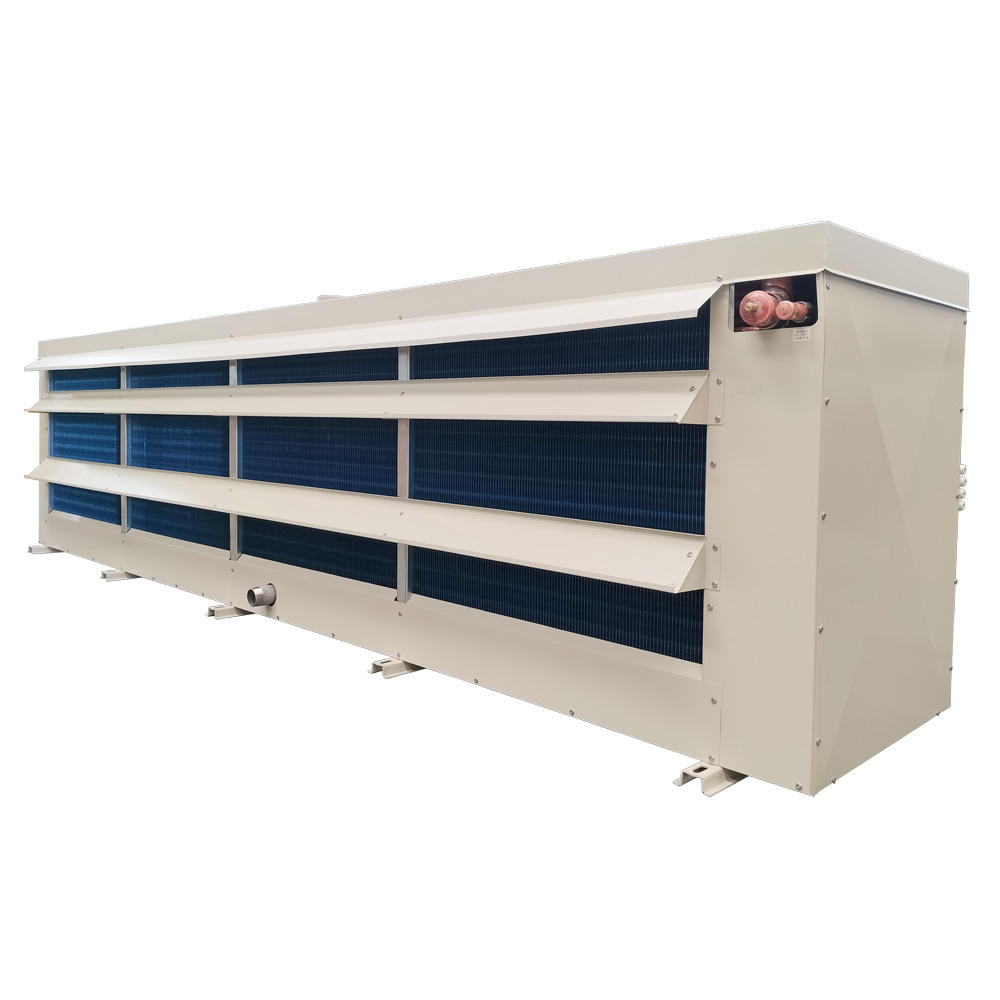
We categorize technical refrigeration failures into systemic mechanical issues and environmental factors. Identifying the correct category streamlines the troubleshooting process. You must pinpoint exactly how the thermodynamic balance failed.
Airflow represents the lifeblood of any commercial evaporator. When air cannot pass over the coils freely, the surface temperature plummets below freezing. The ambient moisture then condenses and freezes instantly.
Dirty evaporator coils severely limit this critical heat transfer. Dust, cardboard particles, and airborne grease clog the delicate aluminum fins. Additionally, failed or obstructed evaporator fan motors stop air circulation entirely. Even if the fans work, poor product stacking often blocks the return air path. You must maintain clear pathways for air to circulate.
Follow these specific product stacking guidelines to ensure adequate airflow:
Keep all product at least 18 inches below the ceiling to allow optimal air throw.
Maintain a minimum of 6 inches of clearance between pallets and the physical walls.
Never stack boxes directly in front of the evaporator fans or the return air intake.
Use grated shelving rather than solid shelves to promote vertical air circulation.
Refrigeration systems must combat ambient humidity continuously. When excess moisture enters the cold room, it gravitates directly to the coldest surface: the evaporator. Rapid ice formation follows.
Worn, torn, or missing door gaskets allow continuous ambient humidity to leak inside. You will often see frost developing near the doors before it reaches the coil. High-traffic operations exacerbate this problem. Employees frequently prop doors open during loading phases. Bypassing strip curtains or turning off air curtains invites massive volumes of warm, humid air into the space.
Many facility managers find the relationship between refrigerant levels and icing counterintuitive. You might assume low refrigerant causes a lack of cooling. In reality, low refrigerant causes the coil temperature to drop radically below the freezing point.
As refrigerant leaks out, the system pressure drops. According to refrigeration pressure-temperature charts, lower pressure equals a lower saturation temperature. The coil becomes so cold that normal atmospheric moisture freezes on contact, leading to rapid evaporator icing. Aging copper lines, vibrating U-bends, and corroded joints often harbor microscopic leaks. Technicians must locate and braze these leaks to restore proper operating pressures.
Commercial cold rooms operate below freezing. Therefore, frost accumulation is a normal operational byproduct. To combat this, systems utilize automated defrost cycles. When these automated systems fail, ice builds up aggressively.
Most commercial systems use electric resistance heaters or hot-gas bypass setups to melt accumulated frost periodically. Electric heaters sit directly inside the coil block. Hot-gas systems reverse the flow of warm refrigerant to heat the coil from the inside out.
A mechanical defrost timer or electronic controller dictates when these cycles occur. If a mechanical timer clock breaks or an electronic relay sticks, the system remains trapped in cooling mode. The heaters never activate. Ice continues to build unchecked day after day until airflow stops entirely.
The defrost cycle must know when to stop. A defrost termination thermostat (or temperature sensor) mounts directly to the evaporator piping. Once the ice melts, the copper pipe temperature rises. The sensor detects this rise (usually around 40°F to 50°F) and signals the controller to end the defrost cycle.
A faulty sensor creates chaos. It may fail to signal the end of the defrost cycle, causing the heaters to run too long and steam the room. Conversely, it might terminate the cycle prematurely before all the ice melts. This leads to erratic cooling performance and rapid re-freezing of the remaining moisture.
A successful defrost cycle generates liquid water. This melted water must exit the cold room efficiently. It drips into a drain pan and flows down a designated drain line to the exterior.
Freezer drain lines contain internal heater cables to prevent the water from freezing during transit. If this drain heater fails, or if debris clogs the pipe, water pools at the base of the coil. When the system shifts back into cooling mode, this pooled water freezes solid. Eventually, a massive block of solid ice engulfs the bottom half of the evaporator.
Facing a frozen coil requires a strategic decision. Facility managers must determine whether a component repair suffices or if a full system upgrade makes more operational sense. You need a clear framework for this crucial next step.
Table: Repair vs. Replacement Decision Matrix
Evaluation Factor | Opt for Component Repair | Consider System Replacement |
|---|---|---|
System Age | Under 7 years old. | Over 10-12 years old. |
Nature of Failure | Isolated component (e.g., bad fan, timer). | Chronic icing, frequent breakdowns. |
Refrigerant Type | Modern, compliant refrigerants. | Phased-out gases (e.g., R-22). |
Compressor Health | Running smoothly, no thermal overload. | Overheating, signs of liquid slugging. |
Component repair makes sense when your equipment is relatively new. If the system is under seven years old, failures are usually isolated. Replacing a single burnt-out fan motor, installing a fresh door gasket, or swapping a defective defrost timer restores functionality quickly.
The implementation reality favors repair for its fast turnaround and low upfront cost. However, you must hire a trusted commercial technician. They need to verify that the icing event did not cause secondary damage to the compressor valves through liquid slugging.
System replacement becomes necessary when repairs offer diminishing returns. You should replace the system if technicians discover massive refrigerant leaks, especially in units utilizing phased-out refrigerants like R-22 or highly restricted high-GWP HFCs. Patching ancient, brittle coils rarely holds up long-term.
If you experience chronic icing despite multiple service calls, the system architecture likely falls short of your current operational demands. Modern units provide advanced EC (Electronically Commutated) fan motors and smart demand-defrost controls. These modern features offer massive energy savings and ensure better compliance with emerging environmental regulations.
Choosing the right contractor dictates the success of your repair or replacement. You need a partner who understands the urgency of perishable inventory. Prioritize contractors offering genuine 24/7 emergency response capabilities and transparent Service Level Agreement (SLA) terms.
Avoid technicians who simply perform "gas and go" top-offs without fixing the underlying leak. A qualified professional must possess the capability to perform rigorous nitrogen pressure testing and pull deep vacuums (down to 500 microns) before commissioning the equipment. Whether you are assessing a new cold room evaporator or hiring a contractor for complex repairs, insist on documented diagnostic procedures.
Preventing ice buildup requires proactive, evidence-based maintenance routines. You cannot wait for alarms to trigger before inspecting the equipment. Regular checks safeguard both airflow and thermodynamic efficiency.
Facility staff should conduct simple visual inspections every single day. Look closely at the evaporator fans. Are they spinning? Shine a flashlight on the coils. Check for uneven frost patterns. Uneven frost often indicates a brewing refrigerant leak, while a solid block of ice points to a failed defrost timer.
Enforce strict door discipline among your team. Auditing your plastic strip curtains weekly prevents massive moisture intrusion. Replace any torn or missing strips immediately. Train employees to never prop open the heavy insulated doors during extended loading sequences.
Check digital temperature displays twice daily and log the readings.
Inspect door sweep gaskets for tears or gaps visible to the naked eye.
Ensure the floor beneath the evaporator remains dry and free of ice patches.
Verify that product stacking rules are strictly followed in every aisle.
Engage a certified technician for quarterly or bi-annual preventive maintenance. Professionals perform deep coil cleaning using commercial-grade, food-safe chemical agents. This removes the stubborn biological and particulate buildup that restricts airflow.
Technicians will perform critical amp-draw testing on defrost heaters and fan motors. If a heater draws zero amps, the element is broken and requires immediate replacement. Furthermore, they will conduct strict refrigerant charge verification via superheat and subcooling checks. This ensures the system runs at peak efficiency long before the harsh summer humidity arrives.
A frozen commercial coil never happens by accident. We must reiterate that a cold room evaporator icing up serves as a glaring symptom of a larger airflow, refrigerant, or mechanical failure. It is rarely an isolated, random event. Identifying the specific failure path empowers you to restore normal operations quickly.
We strongly advise against any form of mechanical de-icing. Hitting frozen coils with hammers, screwdrivers, or sharp scrapers frequently results in punctured copper lines. A punctured coil turns a simple defrost repair into a total, expensive system loss.
Take proactive steps today to protect your valuable inventory and extend your equipment's lifespan. Prompt your facility team to schedule a comprehensive diagnostic with a certified commercial refrigeration technician. Proper diagnostics and routine maintenance remain your best defense against catastrophic icing.
A: No. Using hammers, ice picks, or scrapers poses an extreme danger of puncturing the delicate, pressurized refrigerant lines. A single puncture releases the refrigerant and destroys the coil. We strongly recommend safe thawing methods, such as a complete system shutdown or initiating forced manual defrost cycles via the electronic controller.
A: A standard commercial defrost cycle varies by system size but typically lasts between 15 and 45 minutes. If you notice the cycle running significantly longer, or if the room temperature spikes aggressively during the process, it usually indicates a failed termination sensor or a stuck timer relay.
A: Summer months bring much higher ambient humidity into your facility. When employees open the doors, this heavy moisture enters the room and condenses on the freezing coils. Combined with the compressor working harder to combat the summer heat, this excess moisture overloads your system's existing defrost parameters.


